John C. Welchman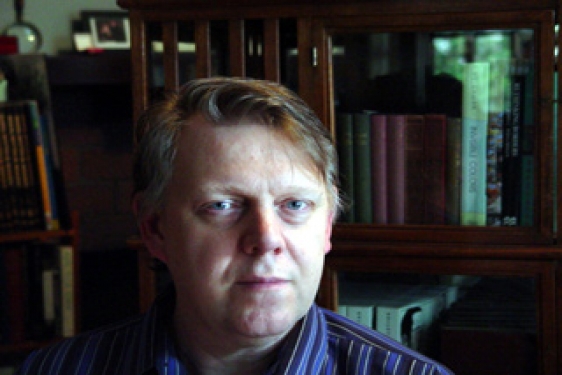
Distinguished Professor
(858)534-6957
jwelchman@ucsd.edu
Office/Studio
Visual Arts Facility 356
Biography
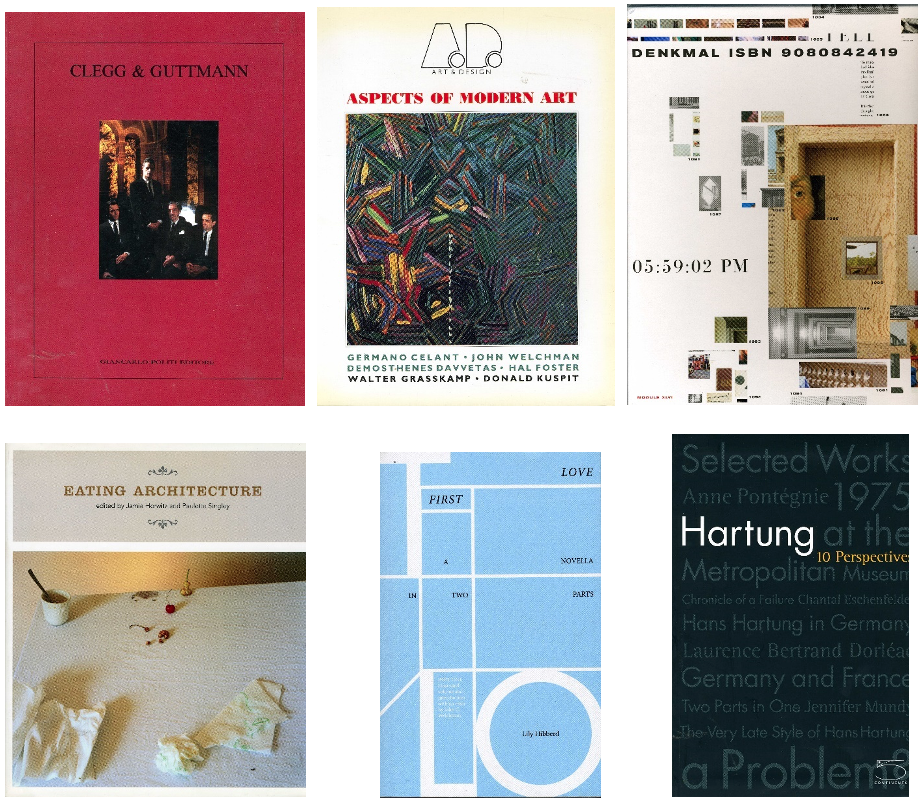
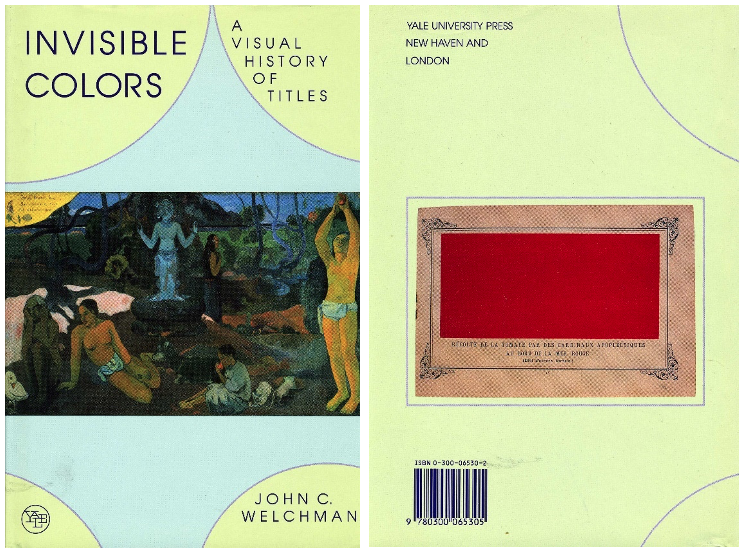
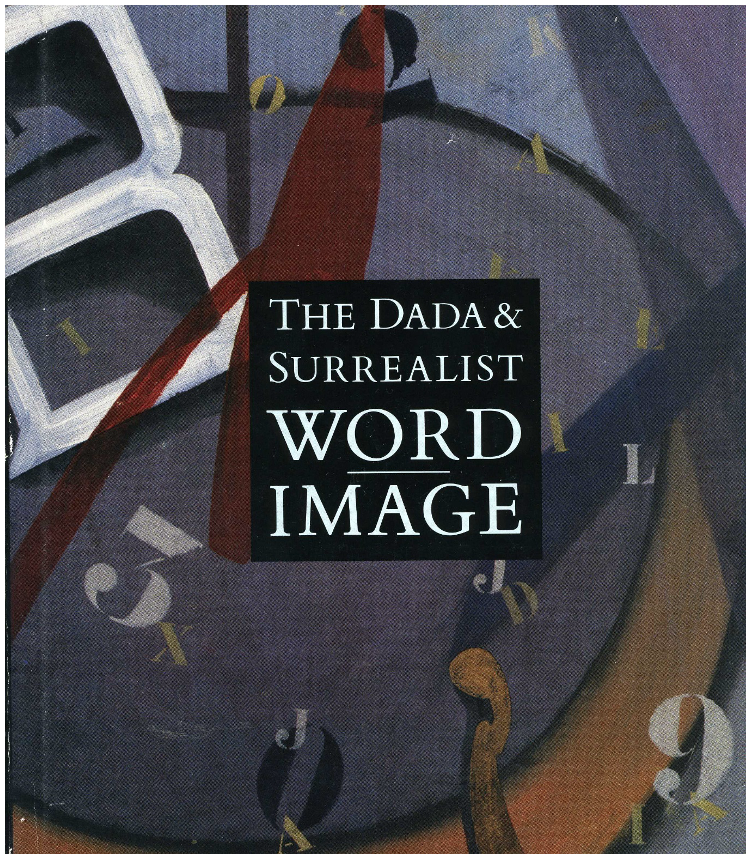
John C. Welchman (BA/MA Cambridge University; MPhil/PhD Courtauld Institute of Art) is Distinguished Professor of Art and Media History, Theory and Criticism and Founding Director and Chair Emeritus of the Mike Kelley Foundation for the Arts. His research has been broadly engaged with art, visual culture and critical theory from the 19th century through contemporary art practices in the late 20th and 21st centuries. Welchman’s early research, developed in his PhD, Word, Image and Modernism: An Analysis of the Orders of Relation Between Visuality and Textuality in the Modern Period (1991) focused on relations between visual and textual discourse from Realism to Postmodernism. This research gave rise to several books and catalogue essays, including Invisible Colours: A Visual History of Titles (Yale, 1997); The Dada and Surrealist Word Image (MIT, 1987); and publications on Conceptual Art and visual postmodernism.
Invisible Colors outlines the first critical history of the provision and circulation of titles for works of art between the Realist and Postmodernist movements (from 1850 to the 1980s), using this as the basis for a more general revisionist reckoning with the history of modern art. Foregrounding three modes of titular activity—denotative, connotative and “untitled”—the study begins with early modernist theory and practice, before discussing how the defining orders of the titular activity were established in the Impressionist, Post-Impressionist and Symbolist movements. Roughly in the middle of the study consideration is made of the consequences and defaults of the title as it was produced and interpreted by Paul Cézanne and Pablo Picasso, and in Cubism. The second section of the book analyzes the two modes of “compositional” titling developed by the pioneer abstractionists, Piet Mondrian and Wassily Kandinsky, and then attends to the multi-functionality of the title in the Dada and Surrealist movements; concluding with an extended discussion of the ramifications in mid and later 20th century art of the titular dynamics thus established. The final chapter takes on the later 20th century destiny of the compositional, examines the paradoxical repression and reappearance of both titles and textuality in the high formalist theory and practice of the 1960s, and looks over to some of the titular endgames associated with Conceptual Art and visual postmodernism. The epilogue reflects on a major subtext of the study on the naming and inscription of institutional space.
Welchman has been active as a critic and commentator since the mid-1980s. He was New York correspondent for Art International in the mid and later 1980s; wrote a column, “Here, There, and Elsewhere,” for Artforum in the late 1980s and early 90s; and contributed to other journals and newspapers of record including New York Times, International Herald Tribune, Los Angeles Times, Sydney Morning Herald, the Economist, and the film journal Screen.
Welchman’s deep and longstanding engagement with exhibition-making is reflected in his authorship of more than a hundred essays for catalogues published in association with exhibitions at Documenta, Louvre, Stedelijk Museum, Centre Pompidou, MoMA|PS1, Tate Modern and Tate Liverpool, Skulptur Projekte Münster, Reina Sophia, Metropolitan Museum of Art, The New Museum, Albertina (Vienna), Museum of Contemporary Art (LA), LA County Museum of Art, Sydney Biennial, Venice Biennale, Vienna Museum of Contemporary Art, Haus der Kunst (Munich), MUAC (Mexico City), M KHA (Antwerp); SMAK (Ghent), Mostyn (Wales), Edinburgh Festival, and Museo Nacional de Bellas Artes de La Habana; as well as numerous smaller-scale, independent and alternative venues (such as Total Art Museum, Seoul, Korea, Libraria Einaudi, Mantova, Italy, Australian Centre for Contemporary Art, Melbourne, Charles H. Scott Gallery, Emily Carr Institute of Art and Design, Vancouver, Canada, Monash University Gallery, Melbourne, Australia, La Casa Encendida, Madrid, Contemporary Art Gallery, Vancouver, Centro de Arte de Salamanca, Spain, Domus Atrium 2 [DA2], Salamanca, Spain, Culturgest, Lisbon, Stedelijk Museum Bureau, Amsterdam, CAPC musée d'art contemporain Bordeaux, Carré d'Art - Musée d'art contemporain de Nîmes, France, Kunsthaus Bregenz [KUB], Austria, Magasin 3 Stockholm Konsthall, Sweden, Universidad Autónoma Metropolitana, Mexico City, kestergesellschaft, Hanover, Nasher Sculpture Center, Dallas, Golden Thread, Belfast, Lothringer13 Halle, Munich, Lop, Seoul, Korea, Craig Starr Gallery, New York, Tabakalera, Kultura Garaikidearen Nazioarteko Zentroa, Donostia / San Sebastián, Spain, Quetzal Art Center, Portugal, Nora Eccles Harrison Museum of Art, Logan, Utah, and Air de Paris).
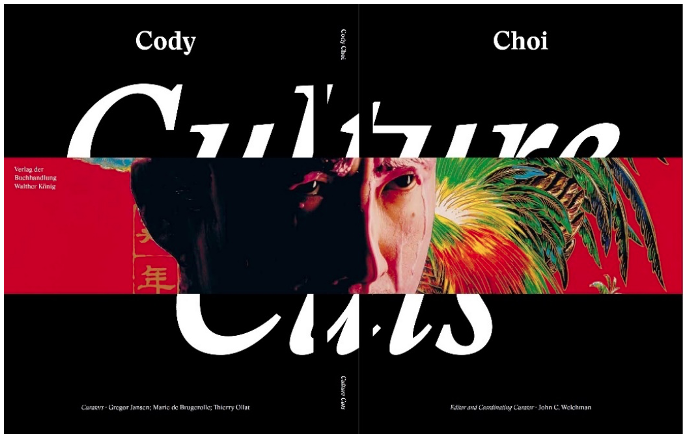
His work as a curator includes “Found Out” an exhibition of American and US-based artists working with photography and related media for the first Incheon International Women’s Bienniale, Korea November 2007 [Eleanor Antin, Joyce Campbell, Orshi Drozdik, Barbara Kruger, Won Ju Lim, Sharon Lockhart, Jean Lowe, Catherine Opie, and Jennifer Pastor]; work with The Mike Kelley Foundation for the Arts [with Ann Goldstein, director, Stedelijk Museum, Amsterdam], on Mike Kelley [retrospective], Stedelijk Museum, Amsterdam (December 15, 2012 to April 1, 2013); Centre Gorges Pompidou, Paris (May 2 to August 5, 2013); MOMA|PS1, New York (October 13, 2013 to February 2, 2014); Museum of Contemporary Art, Los Angeles (March 31 to July 28, 2014); as International coordinating curator, Cody Choi: Culture Cuts, Düsseldorf Kusthalle, Germany (May 9 to August 2, 2015); MAC [Musée d'art contemporain de Marseille], part of Année France-Corée 2015-2016 (April 8 to August 28, 2016); University of Malaga (December 2016); cuator, Yoshua Okón: Colateral, Museo Universitario Arte Contemporáneo, MUAC at the Universidad Nacional Autónoma de México, UNAM (October 7, 2017 to February 11, 2018); Museo Amparo de Puebla (March to June, 2018); curator, On the Last Afternoon: Disrupted Ecologies in the Work of Joyce Campbell, Adams Art Gallery, Wellington, New Zealand, June-September 2019; and curator, The Erotics of Abstraction, Seoul, Korea.
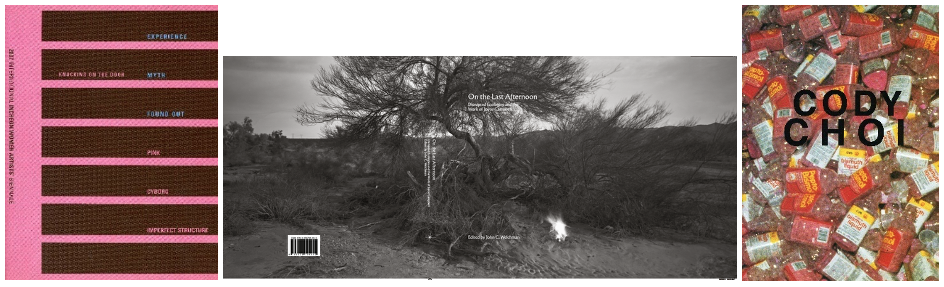
Catalogue Gallery
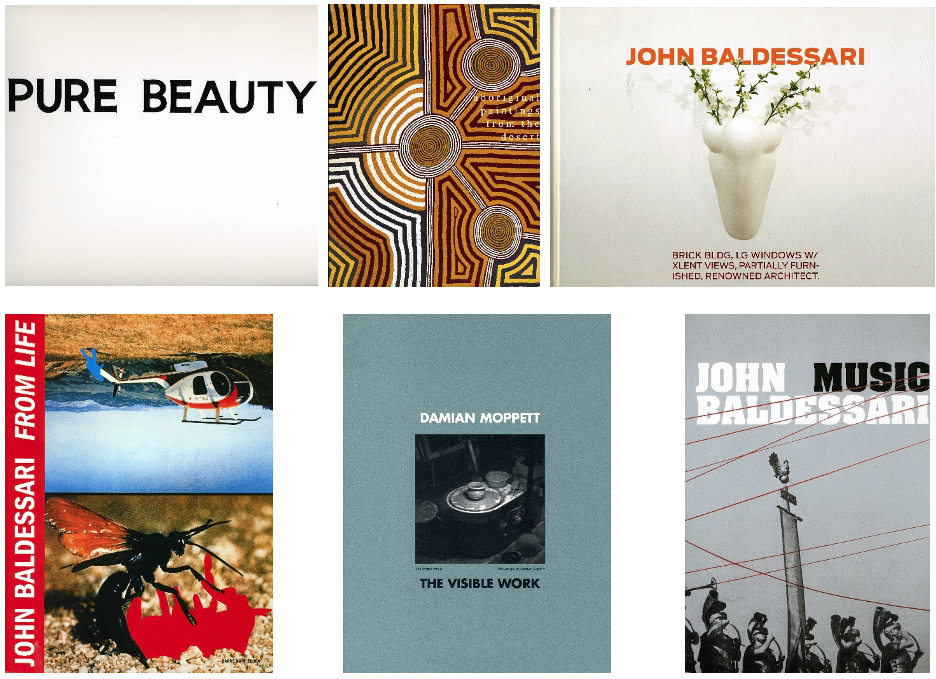

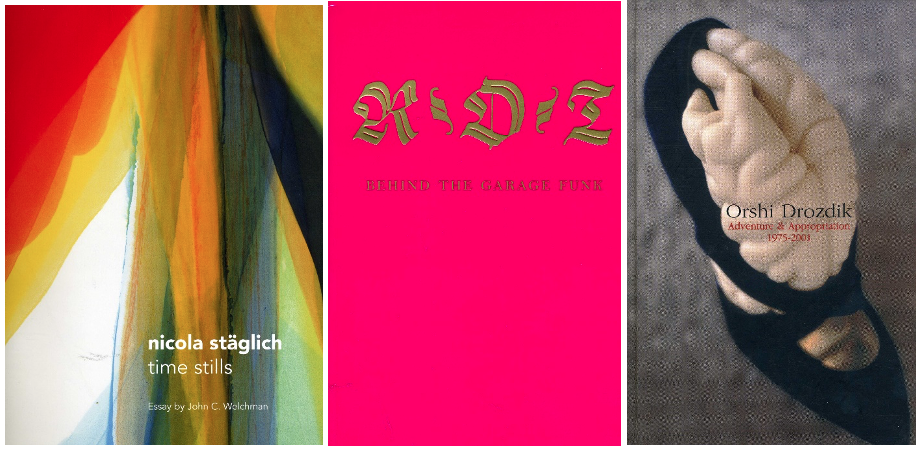
Welchman’s essays on key issues and debates in contemporary art have been collected in several volumes, including Modernism Relocated: Towards a Cultural Studies of Visual Modernity (Allen & Unwin, 1995) and Art After Appropriation: Essays on Art in the 1990s (Routledge, 2001). The former includes discussions of the construction of photographic knowledge in Soviet and post-Soviet photographies based on four years of research in the USSR / Russia between 1988 and 1992; then-recent Australian performance practices that interrogate the relation of architectures and bodies; the stakes of postmodern photographies that dispute with rather than disengage from the construction of historical memory; theories and practices of translation in Conceptual Art; and Aboriginal image-making in the western desserts of Australia. The volume also offers three inter-related texts that discuss the history and theory of border discourse—first in the art world, then in recent critical theory and emergent cultural studies, and, finally, around the specific, geo-political border between the US and Mexico, San Diego/Tijuana; as well as a critical review and analysis of the later writings of cultural theorist Jean Baudrillard (Revenge of the Crystal: Selected Writings on the Modern Object and its Destiny, 1968-83, Pluto Press, 1990; Cool Memories, Verso 1990; and America, Verso, 1988).
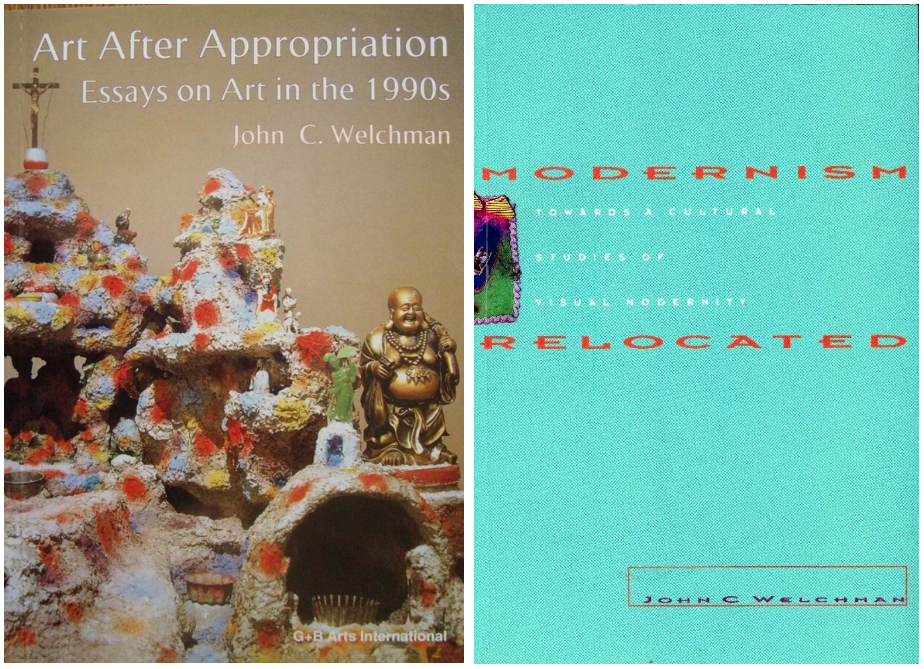
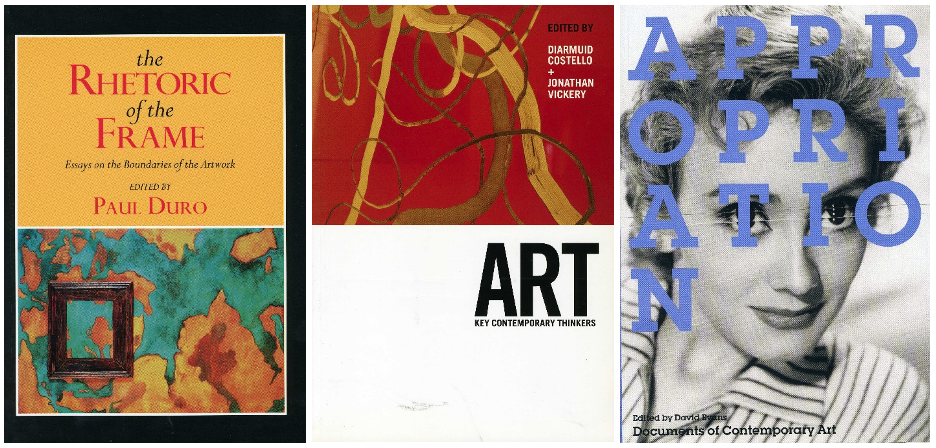
Framed by a long essay on the history and contexts of appropriation, Art After Appropriation thinks through and attempts to move beyond the appropriative paradigms that so vividly marked the Western art world and its peripheries during the decade from the mid-1970s to the late 1980s. Nine chapters, each associated with a moment or plateau in the 90s, examine how artists and institutions situated in different global contexts have inflected, recast and refused the cultures of borrowing and citation. Welchman examines several propositions including that dominant appropriationism was subject to a set of feedbacks, reversals and tactical reformulations from outside the economic and geo-political precincts of its formidable power-bloc in Western Europe and North America. The permissions it granted and strategies it opened up, allowed–on occasion at least–the ideas, products and contexts of the appropriators to be appropriated back. Such processes, random and capricious, or issued in ironic homage, pay little respect to the founding theorisation of appropriation. Instead, they annex materials, fragments and interpretations, turning them into physical armatures or conceptual shell structures for the presentation of hybrid local content. By the early 1990s, Welchman argues, three strands of attention to the appropriation debate are visible. First, the continuation, modification and eventual dilution of the legacy of the Pictures generation; secondly, the first emergence and definition of ‘post-appropriation’; and thirdly, a series of moves that complete the first, as appropriation’s reliance on rhetorics of negativity or obliqueness merges with a strand of anti-academic counter-theorization, popularly correlated with the material profusions of the grunge aesthetic and the textualist disinclinations of the ‘slacker generation’. This last emergence of art after appropriation, then, takes over the gestures of taking, but assumes that the selected presentational facts and self-evident appearances are now remaindered outside of any political or critical predisposition, or effect. Objects and their spreads are supposedly made or found, installed and viewed outside the shell of any theoretical dependence–or even, at the extreme of this tendency, beyond reference itself.
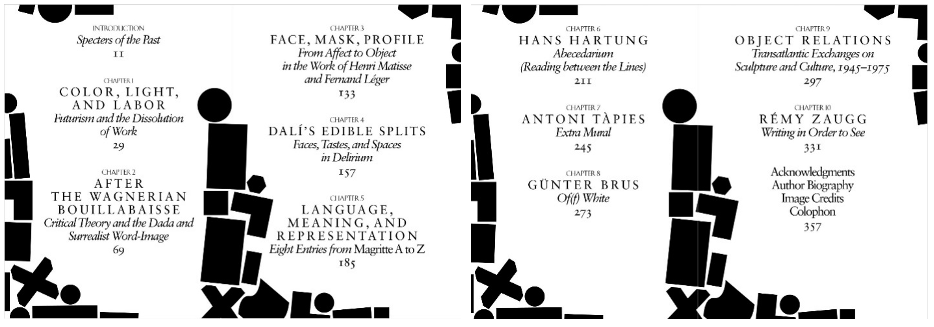
Welchman’s essays on European art in the 20th century are collected in two volumes. The first (chronologically) After the Wagnerian Bouillabaisse (Sternberg, 2019) is named for the long essay “After the Wagnerian bouillabaisse: critical theory and the Dada and Surrealist Word-Image” which maps out different approaches to the word-image compound in the work of Francis Picabia, Marcel Duchamp, Max Ernst, Joan Miró, René Magritte and others, raising questions about thresholds of interpretation and “explosive” meaning in the Dada writings and theory of Tristan Tzara. The anthology also includes discussion of the work of Henri Matisse, Fernand Léger, Umberto Boccioni and Futurism, Salvador Dalí, Hans Hartung, Antoni Tapies, Gunter Brus, “Object Relations: Transatlantic Exchanges on Sculpture and Culture, 1945–1975,” and Rémy Zaugg.
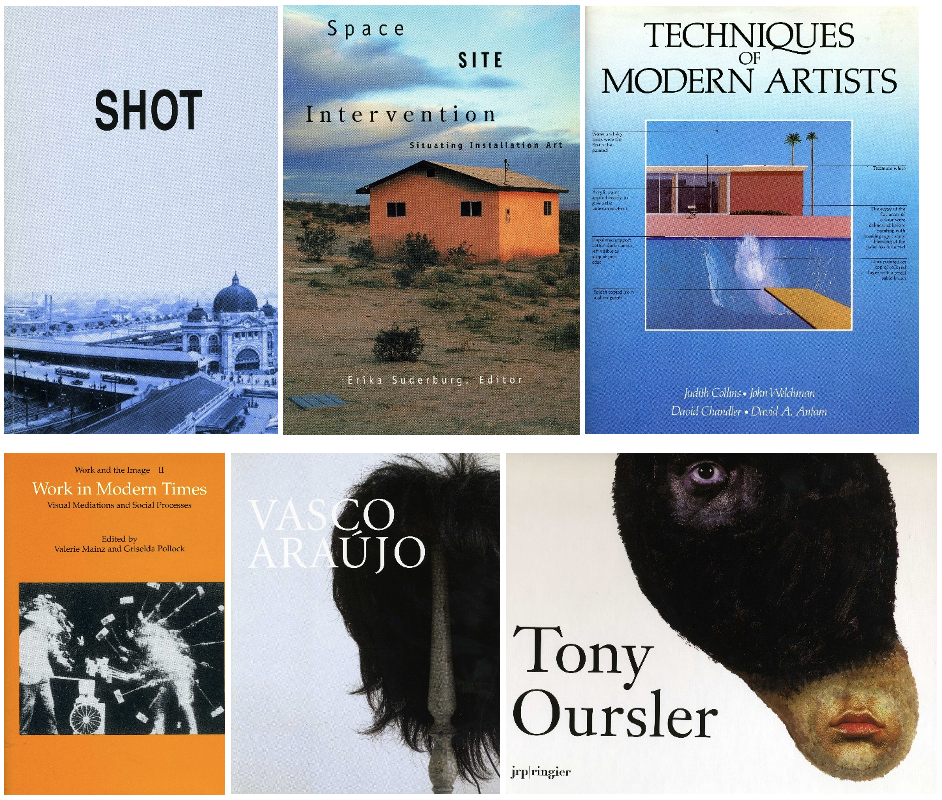
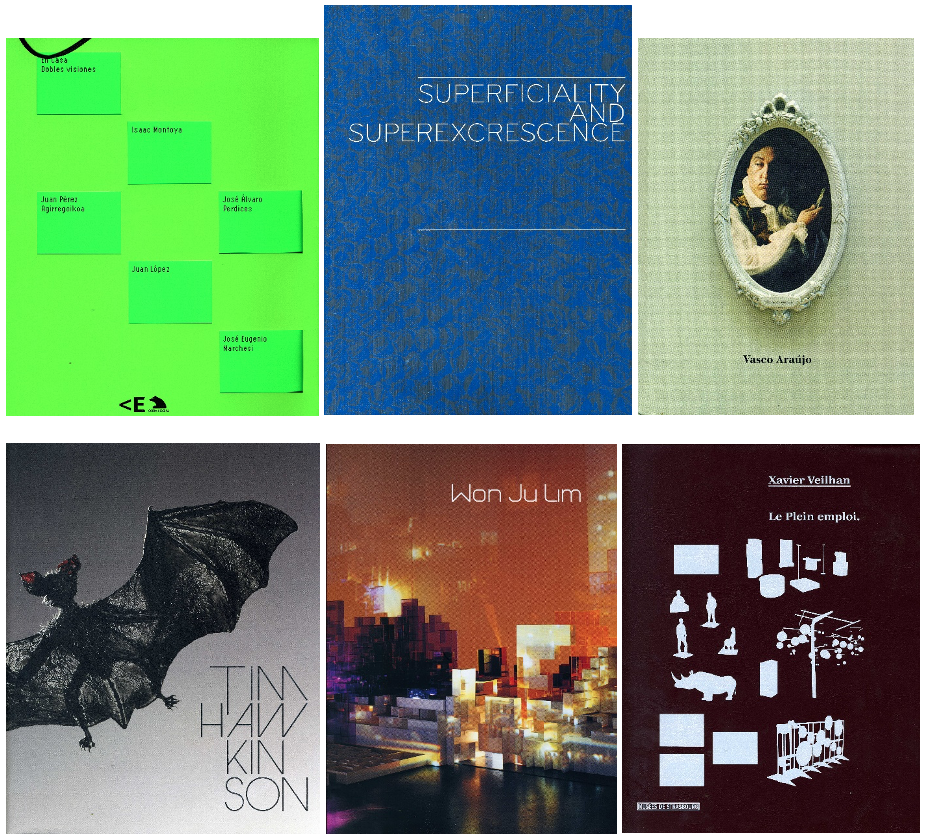
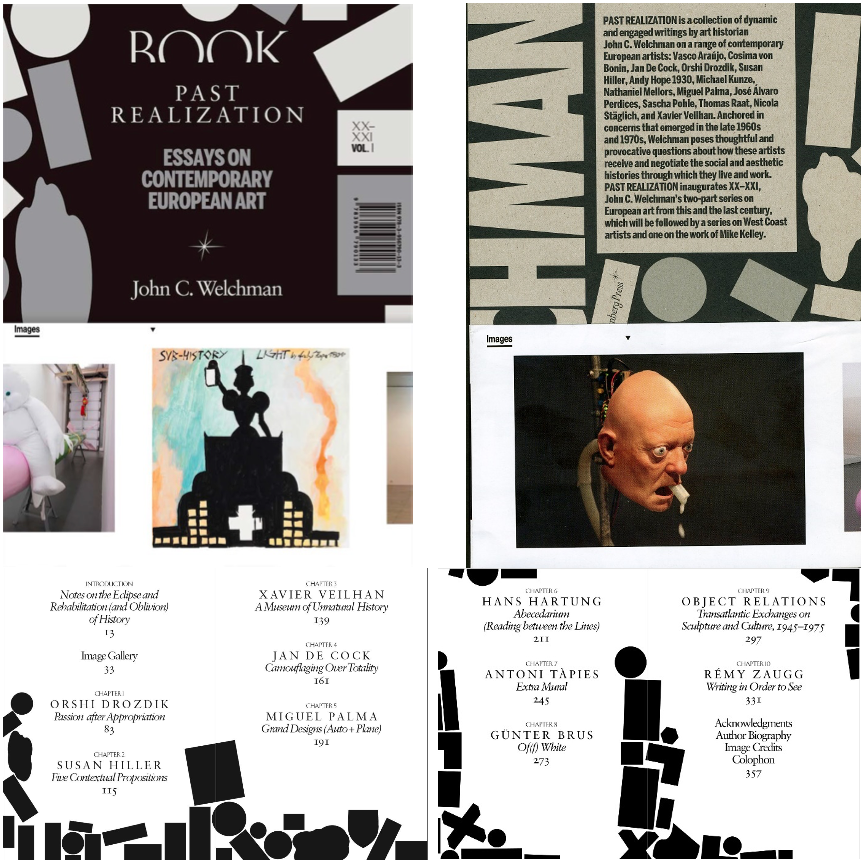
The second volume, Past Realization: Essays on Contemporary European Art (Sternberg, 2016), features discussion of the work of fourteen artists based in Germany, UK, Netherlands, Portugal, Hungary, France, and Spain: Vasco Araújo, Cosima von Bonin, Jan De Cock, Orshi Drozdik, Susan Hiller, Andy Hope 1930, Michael Kunze, Nathaniel Mellors, Miguel Palma, José Álvaro Perdices, Sascha Pohle, Thomas Raat, Nicola Stäglich, and Xavier Veilhan. Anchored in concerns that emerged in the late 1960s and 1970s, Past Realization raises a spectrum of situated questions about how these artists have received and negotiate with the social and aesthetic histories through which they live and work.
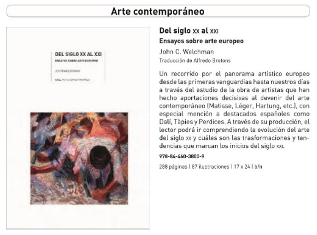
A selection of essays from the two English-language Sternberg volumes have been translated into Spanish by Akal (Madrid) as Del Siglo XX al XXI: Ensayos sobre arte Europeano (2018).
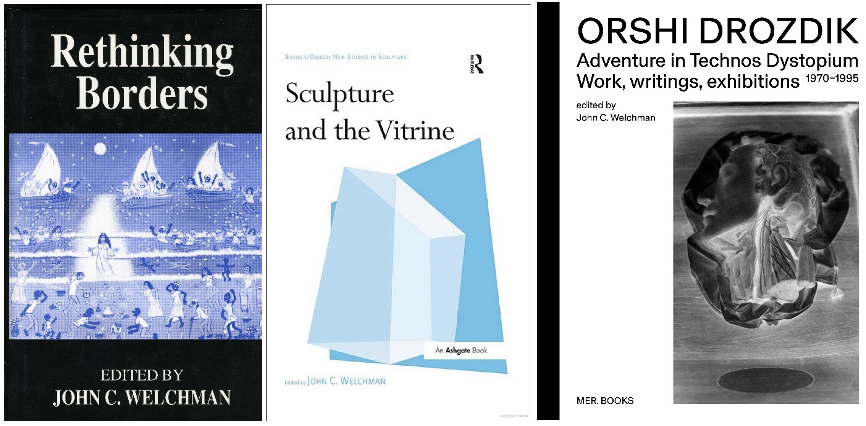
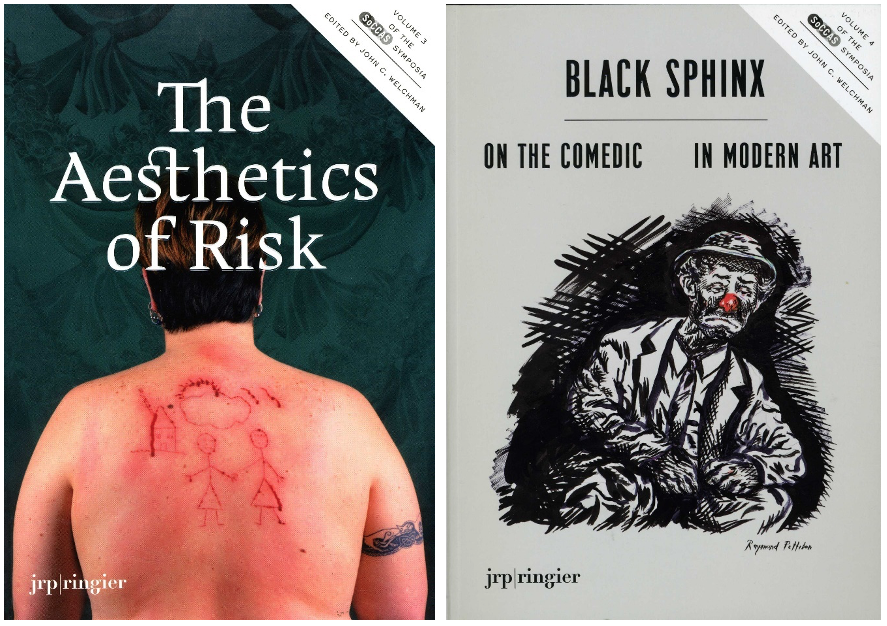
Welchman has been active convening international conferences and events, including as chair of the Southern California Consortium of Art Schools (SoCCAS) in the first decade of the 21st century, a programming initiative that brought together the art programs and departments in the unique constellation of art schools in Southern California (Arts Center; CalArts; Otis; UCI; UCLA; UCSB; UCSD; USC). These efforts gave rise to a pathbreaking sequence of edited publications including Rethinking Borders (Minnesota UP, 1996); the four volumes of the SoCCAS symposia, programmed between 2004 and 2008 at the Museum of Contemporary Art, Los Angeles (Recent Pasts: Art in Southern California from the 90s to Now, JRP|Ringier, 2004); Los Angeles County Museum of Art (Institutional Critique and After, JRP|Ringier, 2006); Getty Research Institute (The Aesthetics of Risk, JRP|Ringier, 2008); and the Hammer Museum (Black Sphinx: On the Comedic in Modern Art, JRP|Ringier, 2010); Sculpture and the Vitrine [Subject /Object: New Studies in Sculpture series, Henry Moore Institute] (Ashgate, 2013); and, most recently, Orshi Drozdik: Adventure in Technos Dystopium (MER. B&L, 2024).

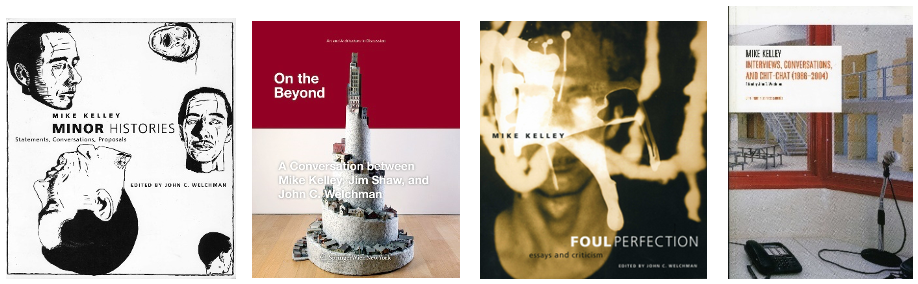
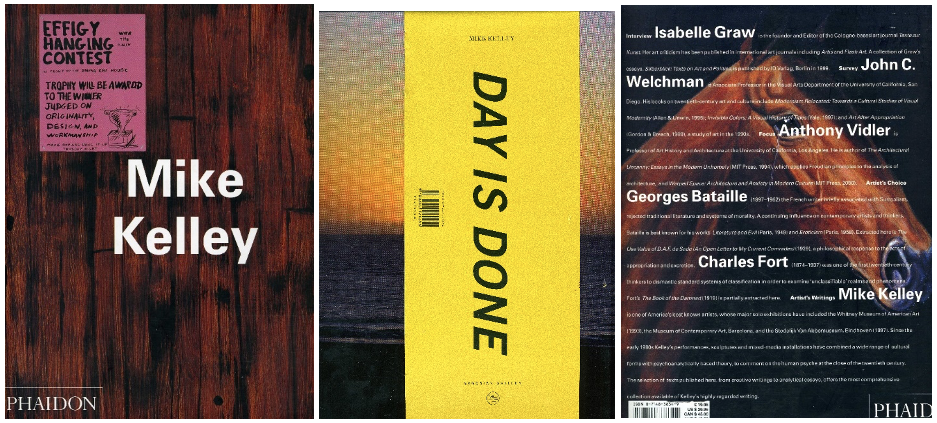
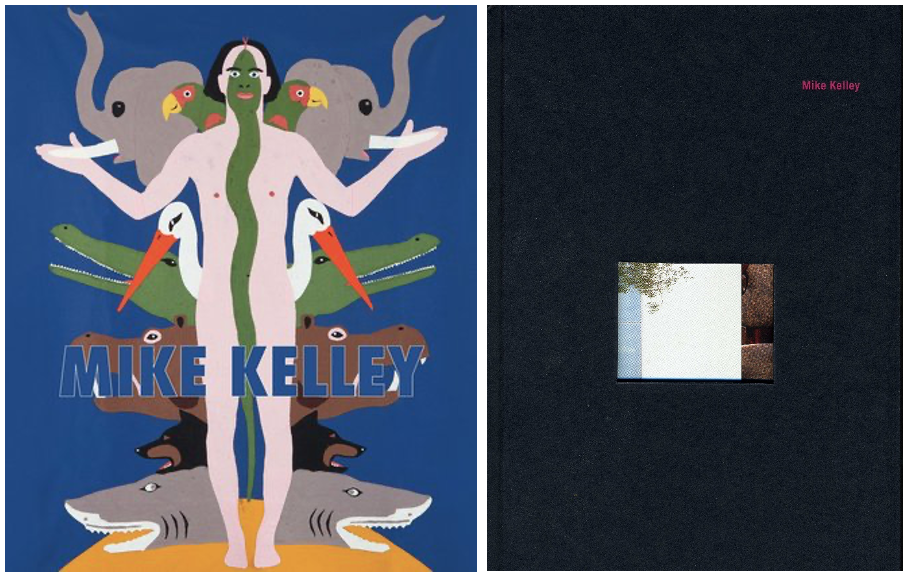
Beginning with his essay for the catalogue of the inaugural exhibition of the Museum of Contemporary Art, Los Angeles in 1986, Welchman has been an engaged critic and commentator on the work of Los Angeles-based artist Mike Kelley, who died in 2012. Artist and scholar collaborated on some 50 books, catalogues, interviews, and essays, including two volumes of Kelley’s collected writings, Foul Perfection: Essays and Criticism (MIT Press, 2003) and Minor Histories: Statements, Conversations, Proposals (MIT Press, 2004); a collection of interviews, Mike Kelley: Interviews, Conversations, and Chit-Chat, 1988-2004 (JRP|Ringier, 2005); and a book-form conversation, On the Beyond: A Conversation between Mike Kelley, Jim Shaw and John C. Welchman, ed. John C. Welchman, [Kunst und Architektur im Gespraech/Art and Architecture in Discussion] (Vienna and New York: Springer, 2011). Welchman wrote the overview essay for Mike Kelley (Phaidon, 1999), and contributed research essays to catalogues for numerous exhibitions, including “The Uncanny and Visual Culture” for The Uncanny, curated by Mike Kelley, Tate Liverpool (February to May, 2004) and Museum Moderner Kunst Stiftung Ludwig [MUMOK], Vienna (July to October, 2004); “Fête Accompli,” for Mike Kelley, Day Is Done, Gagosian Gallery, New York, 2006, published by Yale University Press, 2007; “Glossary” for Mike Kelley, Sammlung Goetz, Munich, 2008-09; “Mike Kelley and the Comedic” and “Work, 1974-2013” in Mike Kelley [retrospective] eds. Eva Meyer-Herman and Lisa Gabrielle Mark (Munich: Prestel, 2013) [Stedelijk, Amsterdam; Beaubourg, Paris; MOMA|PS1, New York, Museum of Contemporary Art, Los Angeles]; “Le Comique Chez Mike Kelley” for Mike Kelley [retrospective], Centre Georges Pompidou, (Paris: Somogy, 2013); “On ‘Being Irish-American (supposedly)': Mike Kelley’s Liquid Diet (1989/2006)” in This is What Comes…, ed. Hugh Mulholland (Belfast: Golden Thread, October 2014); and “Subterranean: caves, basements and darkness in the work of Mike Kelley” in Cave Myths (Endless Spelunking), co-curated by Aveline de Bruin and Xander Karskens, Quetzal Art Center, Portugal (31 March 2019 to 30 March 2020).
Welchman’s essays and articles on Kelley include two discussions of his photographic practices, “History and time in the American vernacular: Mike Kelley’s work with photography” in Imaging History: Photography After the Fact, eds. Bruno Vandermeulen and Danny Veys (Brussels: ASA, 2011) and “Documents, Dreams and Fantasies: Passages Through the Involuntary from Photography to Sculpture in the Work of Mike Kelley” in Involuntary Sculpture, eds. Julia Kelley and Anna Dezeuze (New York: Ashgate, 2013); “Facing in the Direction of a Sodomite Couple (Who Never Responded): Mike Kelley’s Petting Zoo,” in Public Matters: Debates & Documents from the Skulptur Projekte Archives, ed. Hermann Arnhold, Ursula Frohne and Marianne Wagner (Cologne: Walther König, 2019); and writings in Texte zur Kunst (Köln, Germany), vol. 13, no. 49 (March 2003); “1000 Words: Mike Kelley,” Artforum (October 2005); “Mike Kelley,” Flash Art International (November 2005); “Stopgap Measures: Reading Mike Kelley’s Writings,” Reading Room: A Journal of Art and Culture [Special Issue: The Space of Reading] No. 05, 2012; “Mike Kelley (1954-2012): Ten Tributes,” Frieze, No. 146 (April 2012); “Mike Kelley: écrits / The Writings of Mike Kelley,” Art Press (Paris) No. 401 (June 2013). Twenty of Welchman’s essays on Kelley will be published as Stopgap Measures: Collected Writings on Mike Kelley later in 2026.
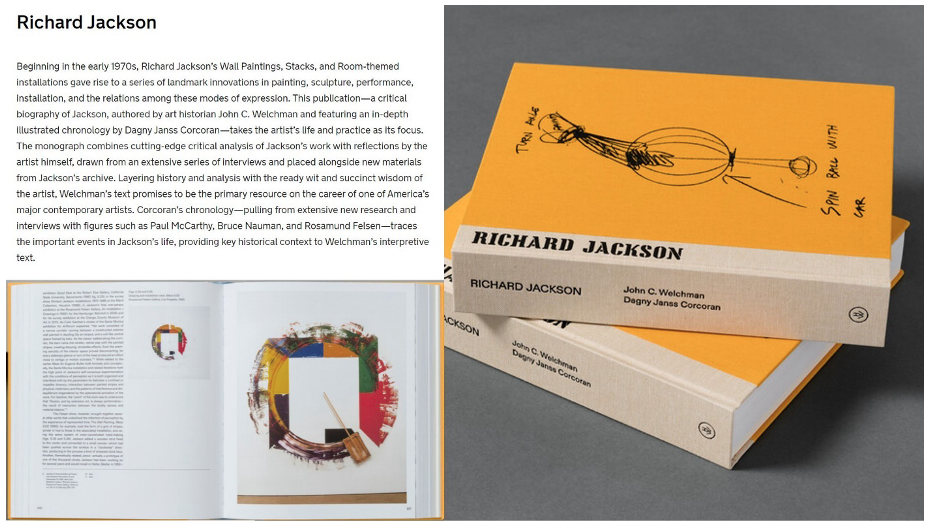
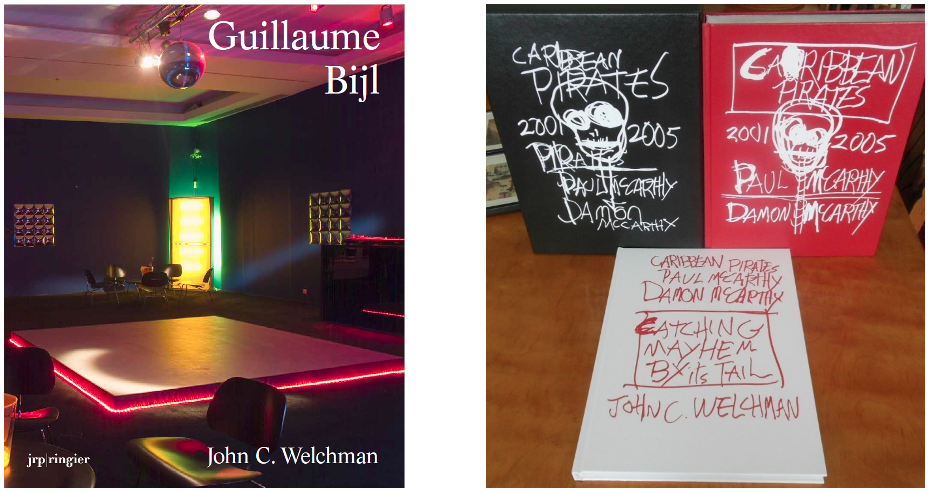
A decade ago Welchman turned his critical attention to the genre of the monograph, producing innov-ative overviews of the work a number of contemporary artists, including noted Belgian post-Conceptual and Installation artist Guillaume Bijl (JRP|Ringier, 2016); Paul McCarthy, Catching Mayhem by its Tale, vol. 2, Paul McCarthy: Caribbean Pirates (Hauser & Wirth, 2019); LA-based painter Ivan Morley (Los Angeles: Kordansky Gallery, 2020); innovative California artist Richard Jackson (H & W, 2020); Belgian artist Koen van der Broek, Out of Place (MER. B&L, 2023); as well as an original study of the multiform practices in film, video, photography, ceramics, performance, installation, and book-, collection-, and exhibition-making of the Paris-based post-collective, Royal Book Lodge (Berlin: Hatje Cantz, 2023).

Recent research and projects in progress
Welchman’s latest monograph (forthcoming with Hilda Press, London in 2026) returns to and reframes his early interest in the relational matrix between language and materialized visualities. It offers the first in-depth, career-long critical survey of the materially and conceptually innovative practice of noted Mexican-born artist Stefan Brüggemann, who currently works between London and Spain. Beginning with his early years in Mexico City, where he was a key participant in the rise of a vigorous alternative art scene—and co-founder of two key independent spaces, Art Deposit and Programa—Welchman examines the vivid legacy of Brüggemann’s signature engagement with a complex array of relations staged between words, language and visualization. He establishes key contexts including the development of collage in the second decade of the twentieth century; discussion of the stakes and implications of mechanical reproduction begun in the 1920s and 30s; and the impact half a century later of the technological revolution that ushered-in new forms of virtual space and social media platforms. Welchman puts Brüggemann’s work and thinking into relation with Conceptual and Post-conceptual art as well as movements that followed on including New York postmodernism, appropriation, Institutional Critique and the rise of graffiti in both its street and gallery manifestations. Key throughout is a keen sense of what sets Brüggemann’s oeuvre apart: the sheer range of formats, materializations and outcomes he mobilizes at the interface of art and language, and the richness of his unstinting dialogue with the protocols and modernist genealogy of the word-image two-step. Welchman guides us through a multifaceted discursive arena set with a heady assemblage of language types and forms—social, material, technological—encompassing signatures, inscriptions, collage, typography, billboards, placards, posters, tagging, stickers, labels, neon signage, LED displays—as well as more recent virtual realizations of language. The book explores how Brüggemann activates the dispositions of language through the space and in the presence of the art object—a project that opens onto linguistically inflected questions of mood, tense, injunction, abbreviation, address, and punctuation; takes stock of the formal, tactile and aural qualities of language—as sound, shape and substance; and raises a torrent of philosophical and political issues framed by the stakes of denomination, definition, order, and reference. He also points to the artist’s knowing awareness of what lies on the other or under-side of language: a recursive, sometimes mischievous, space informed by what Welchman describes as the “propositional uncanny.”
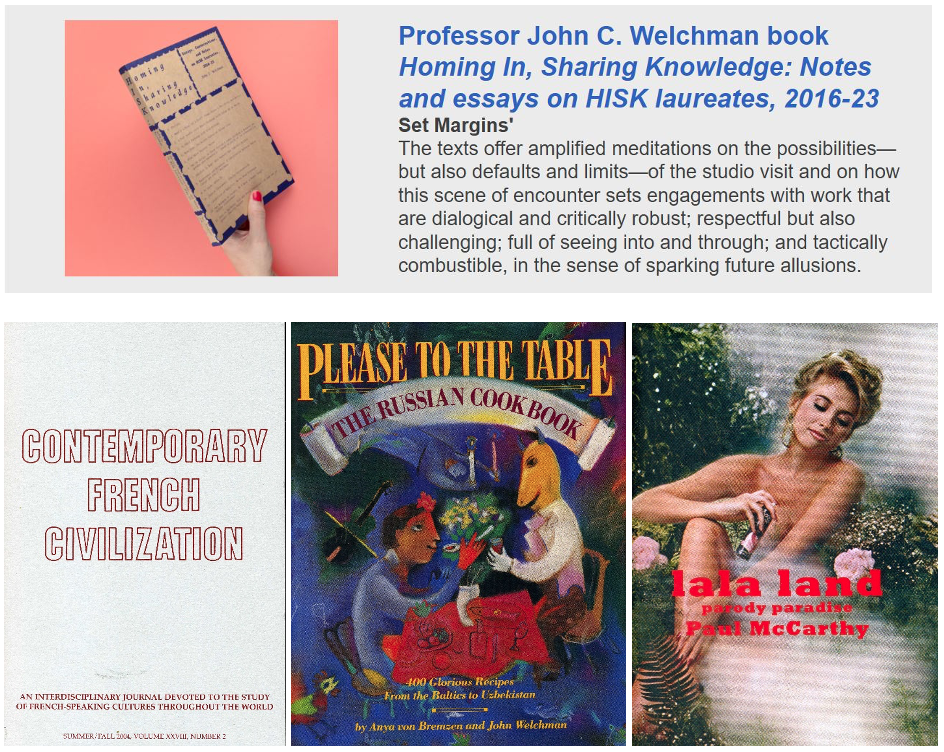
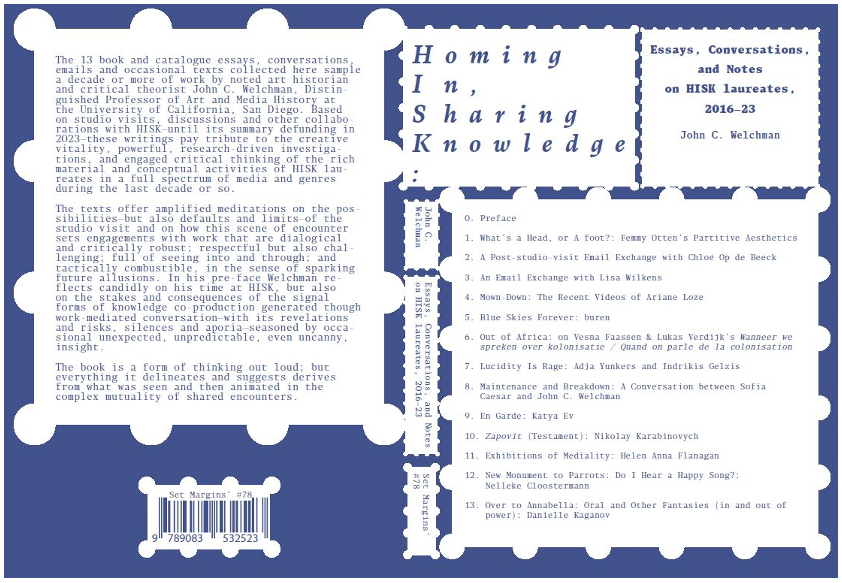
Welchman’s recent anthology, Homing-In, Sharing Knowledge collects thirteen book and catalogue essays, conversations, emails and occasional texts written during his work over the last decade and a half as an Advisor to Hoger Instituut voor Schone Kunsten/Higher Institute of Fine Art (or HIK). Based on studio visits, discussions and other collaborations at HISK—until its summary defunding in 2023—these writings pay tribute to the creative vitality, powerful, research-driven investigations, and engaged critical thinking of the rich material and conceptual activities of HISK laureates in a full spectrum of media and genres during the last decade or so. The texts offer amplified meditations on the possibilities—but also defaults and limits—of the studio visit and on how this scene of encounter sets engagements with work that are dialogical and critically robust; respectful but also challenging; full of seeing into and through; and tactically combustible, in the sense of sparking future allusions. In his preface Welchman reflects candidly on his time at HISK, but also on the stakes and consequences of the signal forms of knowledge co-production generated though work-mediated conversation—with its revelations and risks, silences and aporia—seasoned by occasional unexpected, unpredictable, even uncanny, insight. The book is a form of thinking out loud; but everything it delineates and suggests derives from what was seen and then animated in the complex mutuality of shared encounters.
Welchman’s recent writings include the introduction to Radicale1924 (MER.BOOKS, 2025) an anthology of half a decade (2021-25) of work at the artist-run residency launched by Belgian choreographer Chantal Yzermans and French cinéaste Sylvia Zade Routier in Saint-Cirq-Lapopie in the Lot Valley of SW France. Activating a suggestively opaque interrogatory phrase penned in 1857 by French critic Champfleury, Welchman’s essay, “Une enveloppe villageoise: notes on modernity and rurality,” traces the emergence and dissolution of a chthonic modernism associated with the social, locative and sentimental predicates of the Realist painting and the rural-situated enterprise of the Barbizon School. Welchman notes how the celebration of country life, experience and places was met by its trenchant antithesis in the untrammeled anti-ruralism vented by radical avant-garde formations in the early twentieth century, including Futurism; how it was corrupted in the Blut und Boden (Blood and soil) rhetoric of National Socialism; and reimagined by the Surrealists, including André Breton who had a summer home in Saint-Cirq-Lapopie for the last twenty years of his life. (https://www.radicale1924.org/radicale-19242024)
Welchman also provided an introduction to the exhibition C’est un endroit que je connais assez bien [A place I know quite well]: Véronique Bourgoin, Juli Susin, Royal Book Lodge at Air de Paris, Paris (January 11 to February 14, 2026). Titled after a 1949 drawing by Toyen and framed by his monograph Royal Book Lodge (Berlin: Hatje Cantz, 2023; https://www.royalbooklodge.com/en/type_ journal/royal-lodge-welchman/), Welchman draws on Raoul Vaneigem’s tart critique of Surrealism set out in Histoire désinvolte du surrealism (A Cavalier History of Surrealism, 1977) to discuss how Véronique Bourgoin, Juli Susin and their RBL friends and colleagues worked through an epistemological and aesthetic dispute with the historical deployment of alchemical metaphoricity. (https://airdeparis.com/previews/UnEndroitQueJeConnaisBien-DP-2026-ENGFR.pdf).
Reflecting on his pioneering 2008 anthology The Aesthetics of Risk, Welchman revisited the stakes and defaults of social and political economies of risk in the foreword to a new volume by Francesca Laura Cavallo, Aesthetics of Risk (London: Palgrave Macmillan, 2026). One the premises of both studies is that the modern subject is caught up in an ever-expanding network of predictive and proactive stratagems for the management of risk. How have we organized and repurposed inherited the discourses of natural and social sciences as the development of new ideas about chance and the rise of probability theory have formed promiscuous alliances with law and criminality, medicine, political statistics and polling—and numerous other disciplines and cultural practices? A scene that is being accelerated, restructured, distorted, even evaporated into a startling array of new becomings by the computational and epistemological neo-sublime of Artificial Intelligence. What are the stakes, Welchman asks, of our experience as more or less involuntary parties to the model-based predictive scoring of the events through which our histories unfold? For, in addition to being subjects of the spectacle, we are also hyper-actuarialized citizens, underwritten, over-ridden, speed-bumped, over-drawn, and not occasionally max-ed out by hydra-headed manifestations of preemptory, often fiscalized, social control consolidated in what amounts to an irresistible array of apparatuses of capture for the administration of risk.
Continuing the project of collecting and reframing his writings on modern and contemporary art, Welchman has developed a new volume of essays on noted LA Conceptual artist, John Baldessari. “It’s Alive”: Essays on and Interviews with on John Baldessari (London: Hilda Press, 2026) begins with “Spaces Between or Debt to the Prior: John Baldessari’s Quotidian Dialectics” which offers an original take on the defining overlay—what he terms the “quotidian dialectics”—of ambient localities (streets, cars, stores and businesses), everyday manifestations of the art world and art-school pedagogy (magazines, text books, classroom cliches), and the biography, even the biometric calibration, of the artist himself set out in Baldessari’s establishing work with words and photo-transfer achieved between 1966 and 1968. Chapter 2, ‘“It’s Alive”’, presents excerpts from the most extensive of the formal conversations between Welchman and Baldessari, conducted in the artist’s Venice studio in 2005. It showcases many of the issues unfolded in the accompanying essays, including the early days of Conceptual Art; photography, painting and touch; form, content and relational equilibrium; art world geographies; and the salient turn in the artist’s work in the first decade of the 21st century.
In chapter 3, “Spherical Music: John Baldessari and Synaesthesia After Modernism”, Welchman traces the history of Baldessari’s career-long interest in music and sonic cultures, suggesting that he didn’t just take-up with musical imagery of one kind or another but that he developed and consolidated a signature mode of postmodern synesthesia. Chapter 4, “Re: Facing [Physiognomy Without a Face],” brings together research presented in the catalogues of several exhibitions, including the 2009-11 retrospective, John Baldessari: Pure Beauty investigating Baldessari’s longstanding interest in the form, appearance and social signification of the face. Welchman argues that in the first phases of his career Baldessari developed a unique form of systematic eclipse of facialized personhood, effectively a defacialized physiognomy; but that, beginning with the Prima Facie series (2005–06), he staged an almost startling return to quizzical, face-articulated signification. Chapter 5, “(Not a Colour Photograph): On the ‘Dawning of Aspects’ in ‘This An Example of That,’” is the most closely focused discussion in the book, while at the same time testifying to the artist’s famously gregarious and welcoming nature. Here, Welchman teases out some of the issues and ideas that informed the collaboration between Baldessari and the young Belgian artist Koen van den Broek—by way of Hollywood histories and Ludwig Wittgenstein’s reflections on language and colour. With the exception of chapters 1 and 5, each of the essays, while not by any means inclusive, weaves across and around the almost daunting span of Baldessari’s more than fifty years working as an artist and teacher. The final chapter, “‘Don’t Play It for Laughs’: John Baldessari and Conceptual Comedy”, offers a wide-angled view onto one of the most important aspects of Baldessari’s work: his pervasive navigation of irony, parody, absurdity, and other comedic registers—from slapstick and the stereotypical to deadpan and dark.
Welchman is also assembling his writings on contemporary art in California in two associated volumes under the title West Side Stories. The first brings together Welchman’s exacting essays on artists who established their practices in the L.A. and Southern California art worlds from the 1960s through the 1990s, offering sustained, often surprising, overviews of the key issues and debates around their work. The second widens this perspective to include essays and commentaries about the work of artists from the next generation moving focus to survey the broader West Coast, from Mexico City, the Border and San Diego to Los Angeles, the Bay Area and Vancouver. Volume one includes revisionist essays on Alan Kaprow, Larry Bell, Jim Shaw, the “Art Rebate/Arte Reembolso” group, Tim Hawkinson, Eleanor Antin, Catherine Opie, Paul McCarthy, Frank Gehry, Jean Lowe, Sharon Lockhart, and Richard Jackson. Volume II features several thematic essays, including a reflection on the legacy of CalArts and on West Coast abstraction, as well as discussions of the work of Tala Madani, Damian Moppett, Won Ju Lim, Rubén Ortiz-Torres, Yoshua Okón, Mark Grotjahn, Ivan Morley, Lia Halloran, and others.
Publications Gallery